Posts by:

admin@meteda

MetaClinic®: a digital platform for integrated management of chronic patients

The management of diabetes and chronic diseases today requires digital tools capable of supporting patients throughout the entire care pathway, going beyond the single outpatient visit.

Increasing clinical complexity, the frequent presence of comorbidities, and the need for continuous monitoring make it essential to have a structured and longitudinal view of the patient’s clinical history. In this context, access to reliable and well-organized information over time becomes a key element in supporting the work of healthcare professionals.

MetaClinic® was developed with this objective: to provide an electronic health record designed to coherently integrate all the main components of the care pathway. Medical history, follow-up visits, prescriptions, monitoring activities, clinical documentation and decision-making processes are brought together within a single structured digital environment.

The platform allows healthcare professionals to rely on a system designed to manage clinical information effectively, facilitating data consultation and ensuring traceability of clinical activities over time. This makes it possible to maintain a comprehensive view of the patient’s clinical evolution and to support more informed therapeutic decisions.

In a healthcare context where continuity of care is becoming increasingly important, digital solutions such as MetaClinic® help reduce data fragmentation, improve the readability of the care pathway and support a more coordinated patient management process.

The integration between technology and clinical practice therefore becomes a key factor in addressing the management of chronic diseases, supporting healthcare professionals and contributing to improved quality of care over the long term.


By 0 Comments

Telemedicina in diabetologia: continuità assistenziale e integrazione clinica

Telemedicine in Diabetology: Continuity of Care and Clinical Integration

In diabetology, telemedicine is not simply a response to physical distance between patients and healthcare facilities. It is an organizational and clinical tool that, when properly integrated into care processes, can strengthen continuity of care and reinforce the therapeutic relationship over time.

Diabetes management requires continuous monitoring, progressive therapeutic adjustments, and a longitudinal interpretation of clinical evolution. In this context, tools such as telemonitoring, teleconsultation, and remote visits acquire real value only when they are part of a coherent and structured information ecosystem.

Telemedicine and Electronic Health Records: A Necessary Integration

Telemedicine becomes truly effective when it is connected to the electronic health record (EHR), the patient’s historical data, and the clinician’s decision-making processes.

If data collected remotely remain separate from the clinical record, the result is fragmented pathways and disconnected information flows. When, instead, all data converge into a single structured environment, digital tools become a natural extension of the in-person visit.

In this way, telemonitoring is no longer an isolated stream of information, but a component of an integrated clinical framework that combines glycemic parameters, therapies, comorbidities, and longitudinal trends.

Continuity of Care in Chronic Disease Management

In the management of chronic, frail, or multi-morbid patients, continuity of care is essential. Maintaining a structured and ongoing connection between healthcare professionals and patients allows for early identification of critical issues, improved therapeutic adherence, and a reduction in unnecessary in-person visits.

However, the quality of telemedicine is not measured by the number of digital interactions or the volume of transmitted data. It is measured by the coherence of the clinical pathway it supports: its ability to integrate in-person and remote care into a single, traceable, and documentable decision-making process.

An Integrated Model for Digital Diabetology

For telemedicine to deliver tangible benefits, it must be designed as part of an integrated care model. This means ensuring interoperability with healthcare information systems, seamless integration with electronic health records, and structured governance of clinical data.

The objective is not to oversimplify the complexity of diabetes, but to make it more interpretable and manageable through digital tools that support daily clinical practice.

Meteda has long invested in the development of telemedicine solutions fully integrated with structured electronic health records, ensuring continuity of care, data traceability, and decision support throughout the entire patient journey.

Digital transformation in diabetology is not about adding more tools, but about building an ecosystem where technology and clinical expertise work together to improve long-term care management.

By 0 Comments

Artificial Intelligence and Diabetology: Toward a More Predictive and Informed Clinical Practice

In recent years, artificial intelligence (AI) has taken on an increasingly significant role in the scientific and organizational debate surrounding diabetology. It is no longer viewed as a purely theoretical or experimental perspective, but as an applied field that, when properly structured, can provide concrete support to everyday clinical practice.

The fundamental premise is clear: the effectiveness of artificial intelligence depends on the quality of the data on which it operates. In diabetology, this means having access to reliable, complete, structured, and longitudinal clinical information. Glycemic trends, metabolic parameters, ongoing therapies, intercurrent events, complications, comorbidities, and follow-up data together form an informational asset that, when consistently organized, enables algorithms to identify recurring patterns and clinically meaningful correlations.

The analysis of large volumes of data makes it possible to move beyond a fragmented interpretation of single clinical episodes, fostering a longitudinal view of disease progression. In this context, predictive models can be developed to support risk stratification and the monitoring of potential microvascular and macrovascular complications. Predictive medicine does not aim to replace clinical expertise, but rather to reduce decision-making uncertainty through a broader and more systematic interpretation of available information.

For these tools to be truly effective, artificial intelligence must be integrated into clear, traceable clinical workflows governed by healthcare professionals. AI does not operate autonomously: it provides analytical support, highlights potential risks, and suggests risk stratifications. Responsibility for decision-making remains with the physician, who interprets the results in light of the patient’s specific clinical context.

In this sense, artificial intelligence does not replace clinical judgment; it strengthens it. It offers tools to interpret the complexity of diabetes in a more continuous, informed, and conscious way, particularly when supported by large and longitudinal datasets. Its usefulness increases when embedded within a structured digital ecosystem where data are governed, documented, and made available throughout the entire care pathway.

The current challenge is not only technological, but also organizational and cultural. It involves designing information systems capable of supporting structured data collection and management, promoting interoperability among tools, and ensuring traceability of decision-making processes. Only in this way can artificial intelligence make a meaningful contribution to the quality of care and the management of chronic diseases.

In diabetology, where continuity of care and long-term monitoring are central elements, AI can become a strategic ally. Not as a substitute for the care relationship, but as a support to the clinician’s ability to interpret and manage complexity, with the goal of improving prevention, personalizing care pathways, and enhancing the sustainability of healthcare systems.

By 0 Comments

When a digital solution truly becomes useful in clinical practice

In healthcare, the effectiveness of a digital solution is not measured by its level of technological sophistication, but by its ability to be used every day, consistently, within the real complexity of clinical work.

Many digital health projects, despite being based on advanced technologies, struggle to achieve real adoption in daily practice. This is often not due to technical limitations, but rather to a lack of alignment with three key factors that determine the actual value of a clinical solution.

The first factor is alignment with the real workflows of healthcare professionals. A digital solution must fit naturally into existing processes—clinical visits, follow-up, documentation, and multidisciplinary collaboration—without introducing rigid structures or artificial steps. When a tool forces clinicians to radically change the way they work, it risks becoming an obstacle rather than a support.

The second factor is operational sustainability. Time requirements, roles, and responsibilities must be clearly defined and compatible with routine clinical activity. Systems that generate duplicate data entry, require redundant tasks, or remain disconnected from existing information ecosystems increase operational burden and reduce overall efficiency.

Finally, clinical value must be clear, measurable, and documentable. A digital solution is meaningful only if it contributes concretely to the quality of patient management, supports clinical decision-making, and strengthens continuity of care by making clinical data readable and usable over time.

When these conditions are not met, technology risks becoming just another system to manage. When, instead, a solution integrates seamlessly into everyday clinical practice, it becomes an enabling factor—simplifying workflows, connecting information, and reinforcing the work of healthcare professionals.

This principle lies at the core of Meteda’s approach. Digital solutions are designed not to ask clinicians to change the way they work, but to support them in doing what they already do—more effectively, with greater continuity, less fragmentation, and higher clinical reliability.

By 0 Comments

Clinical data governance: when information becomes a tool for care

In today’s debate on digital health, the term data is often used as if it referred to a neutral, self-sufficient element, intrinsically capable of generating value. In healthcare, however, this simplification does not hold.

Clinical data gain meaning only when they are properly governed. Their usefulness does not depend solely on the measurement itself, but on essential factors such as data quality, traceability, clinical context, and the security of information flows.

A common example from diabetology clearly illustrates this point: two identical glucose values may reflect profoundly different clinical situations depending on variables such as ongoing therapy, patient adherence, the sequence of previous clinical events, the presence of comorbidities, or longitudinal trends over time. Without a structured clinical history, that value remains an isolated piece of information, unable to meaningfully support clinical decision-making.

For this reason, digital platforms in healthcare cannot be limited to the mere recording of data. They must enable a longitudinal and coherent interpretation, make decision-making processes transparent, and ensure the protection and integrity of information throughout the entire care pathway.

In this context, data governance represents the key step that transforms a repository into an active clinical tool: a concrete support for patient management, follow-up activities, and the long-term care of chronic conditions.

Our approach is rooted in this awareness. Technology and organization are designed to coexist, with the aim of supporting daily clinical practice through reliable systems capable of adapting to complex care pathways and accompanying the management of chronic diseases over time.

By 0 Comments

Integrated care models: when in-person and remote care become a single clinical pathway

In discussions around digital health, in-person care and remote care are still often described as alternative approaches. In reality, the real challenge is not choosing one over the other, but integrating them into a single, coherent and continuous clinical pathway, especially in the management of chronic conditions.

An integrated care model does not mean “using telemedicine from time to time.” It means designing a unified clinical pathway in which each modality has a precise role: some phases necessarily require the patient’s physical presence—such as complex initial assessments, key decision points or specific diagnostic tests—while others can be managed remotely without any loss of clinical quality, including monitoring, follow-up, therapeutic adjustments and structured counselling.

The quality of this model depends on continuity. Remote activities must rely on the same clinical references, documentation standards and health records that guide in-person visits. Otherwise, the risk is the creation of parallel pathways that fail to communicate with each other.

The most delicate aspect is the transition between different care settings.

When data collected remotely remain separate from the electronic health record, the integrated model loses effectiveness and generates fragmentation: more tools, more channels, less clarity. When information flows are fully integrated, remote care strengthens patient management by enabling longitudinal analysis, early identification of critical issues, improved therapeutic adherence and a reduction in unnecessary in-person visits—without disrupting the continuity of care.

To function effectively, an integrated care model requires several essential operational conditions. First, integration with the electronic health record and related clinical processes. Second, the traceability of remote clinical activities, ensuring that every intervention is documented and verifiable. Finally, the clear definition of roles, responsibilities and decision thresholds: who monitors which data, when to intervene and according to which criteria.

When these conditions are met, in-person and remote care cease to be opposing modalities and become two expressions of the same clinical work.

By 0 Comments

Managing chronic diseases requires structured collaboration

Collaboration between hospitals, community care and primary care: the role of digital platforms in chronic disease management

The management of chronic diseases is one of the major challenges facing modern healthcare systems. Conditions such as diabetes, cardiovascular diseases and metabolic disorders require continuous, coordinated care pathways based on structured collaboration between hospitals, community services and primary care.

In this context, the fragmentation of clinical information represents a significant barrier to continuity of care. Data stored across different systems, unstructured communication and limited information sharing among healthcare professionals can negatively affect follow-up activities and the quality of clinical decision-making.

Meteda’s digital platforms are designed to support an integrated model of care by facilitating the sharing of clinical information among specialists, hospitals and community-based services. Through interoperable systems and electronic health records, healthcare professionals can access a unified and up-to-date view of the chronic patient’s care pathway.

This approach enables more efficient coordination across different levels of the healthcare system, improving communication among stakeholders and reducing gaps in care delivery. Structured collaboration allows consistent documentation of medical history, therapies, follow-up activities and potential complications, making care pathways more fluid and sustainable over time.

Digital health applied to chronic disease management is not merely a technological evolution, but a practical enabler of modern healthcare organization. Integrating hospitals, community care and primary care strengthens patient-centered care, improves the quality of assistance and supports a more efficient use of healthcare resources.

By 0 Comments

The value of integrated clinical data

Integrated clinical data and digital health: a new approach to chronic disease management

In the management of chronic diseases, particularly diabetes, individual clinical data have limited value when not embedded in a structured and coherent clinical context. Fragmented information, isolated measurements, and disconnected follow-up processes can hinder clinical decision-making and negatively impact continuity of care.

A truly meaningful clinical interpretation emerges from the integration of medical history, biological parameters, therapeutic plans, longitudinal monitoring, and structured follow-up. This integrated approach represents a cornerstone of digital health in diabetology, where the complexity of chronic conditions requires tools that support timely, informed, and personalized clinical decisions.

Meteda’s digital solutions are designed to overcome clinical data fragmentation by providing healthcare professionals with a unified, longitudinal, and continuous view of the patient journey. The goal is to transform clinical data into actionable information, fully embedded within daily clinical workflows and care pathways.

Through interoperable clinical platforms and structured data management systems, Meteda supports a model of digital chronic care management focused on decision quality, complication prevention, and long-term sustainability of healthcare systems.

By 0 Comments

Artificial Intelligence in Diabetology

Artificial intelligence is taking on an increasingly important role in diabetes management, particularly in the prevention of complications and the personalization of care pathways.

Read our Q&A with 4 key questions.

1. What is the role of AI in diabetes management?
Artificial intelligence supports physicians in analyzing large volumes of clinical data, helping to identify patterns, evolving trends, and risk factors that are difficult to detect through traditional analysis.
It does not replace clinical judgment, but strengthens it, contributing to more timely and informed decisions.

2. In which clinical areas is it most useful?
AI is applied in predicting the risk of developing complications and in monitoring clinical progression over time.
In diabetology, it is particularly relevant for the prevention of cardiovascular, nephrological, neurological, ophthalmological, and metabolic complications, supporting a more proactive management of the disease.

3. How is it integrated into care pathways?
Algorithms are integrated into the electronic medical record, allowing the benefits of AI to be accessed directly within care pathways, without the need for separate tools disconnected from daily clinical practice.

4. What is the value for physicians and patients?
For physicians, AI represents a data- and evidence-based decision support tool, useful for guiding follow-up and preventive strategies.
For patients, it means more personalized care pathways, more effective prevention of complications, and more continuous and informed long-term care.

By 0 Comments

MetaClinic® for chronic disease management

The management of chronic diseases requires continuity of care, coordination among different stakeholders, and a complete, longitudinal clinical perspective.

MetaClinic® is designed to support healthcare professionals throughout the entire care pathway, integrating medical history, follow-up, therapies, complications, and telemedicine tools into a single digital environment.

The electronic health record allows the patient’s progression over time to be documented and enables the sharing of structured information among specialists, community healthcare services, and other professionals involved in care delivery.

An approach that makes follow-up more effective and strengthens the quality of the clinical relationship in the management of long-term conditions.

By 0 Comments

Innovation and research for a healthcare without borders

In a constantly evolving healthcare system, research and international collaboration are the keys to building models of care that are increasingly effective, sustainable, and people-centered.

With our Global Projects Team, we take part in European and international initiatives dedicated to healthcare innovation, adopting an approach grounded in research, sustainability, and measurable impact on care systems.

Our commitment focuses on developing digital solutions for the prevention, management, and monitoring of chronic diseases, integrating clinical, technological, and service design expertise to enhance both the experience and quality of care.

Through collaboration with universities, research centers, and industrial partners, we contribute to testing new care models based on data, artificial intelligence, interoperability, and personalized medicine.

Our vision is of a more participatory and interconnected healthcare system, where citizens, professionals, and institutions share common tools to promote health and well-being. Only an open, multidisciplinary, and results-oriented collaboration can transform innovation into tangible value for care.

By 0 Comments

intelligenza artificiale e medicina predittiva nel diabete

Artificial intelligence in predictive diabetes medicine.

Artificial intelligence is opening up unprecedented possibilities in predictive medicine, particularly in diabetes, where the ability to promptly identify the risk of complications can radically change the quality and outcome of treatment.

With our team of physicians, researchers, computer engineers, and epidemiologists, we have developed AI-based predictive computing models capable of estimating, with statistical robustness, the likelihood of developing significant complications in people with diabetes.

By analyzing large amounts of longitudinal clinical data collected over time using Metaclinic, our electronic medical record, our algorithms identify recurring patterns and produce personalized predictions based on each patient's specific characteristics.

The models currently in use allow us to estimate the risk of ocular, cardiovascular, cerebrovascular, peripheral vascular, nephropathic and diabetic neuropathic complications.

The goal is twofold: to anticipate clinical interventions and improve overall patient care, making care more proactive and personalized. In many centers, predictive medicine is beginning to become an integral part of digital care pathways.

By 0 Comments

Meteda Telemedicine

In recent years, telemedicine has transformed the way we understand care: from a simple technological support, it has become a natural extension of the clinical relationship. Yet a crucial question remains: how can we make therapy technologically advanced and safe without dehumanizing it?

This reflection has inspired Meteda's years-long work developing integrated telemedicine solutions for teleconsultations, secure communication, and telemonitoring, designed to support healthcare professionals in caring for chronically ill patients, particularly those with diabetes.

The devices developed by Meteda allow you to:

  • manage televisits and teleconsultations with direct consultation of clinical data and integration with reporting systems;
  • maintain a secure and traceable communication channel between healthcare workers and patients, promoting continuity and multidisciplinary coordination;
  • activate telemonitoring methods, with integration of measuring devices and automatic parameter analysis for timely clinical intervention.

Today, telemedicine is increasingly part of the clinical care pathways for fragile or complex patients. In many centers, the adoption of digital tools is already changing the way teams work, improving treatment adherence, continuity of care, and the quality of the doctor-patient relationship.

All Meteda solutions are certified medical devices, GDPR compliant, interoperable with the digital structures of the public healthcare ecosystem and integrated with Metaclinic, the electronic medical record.

By 0 Comments

“Therapeutic, technological, and healthcare innovation: together we build the future of diabetes.”

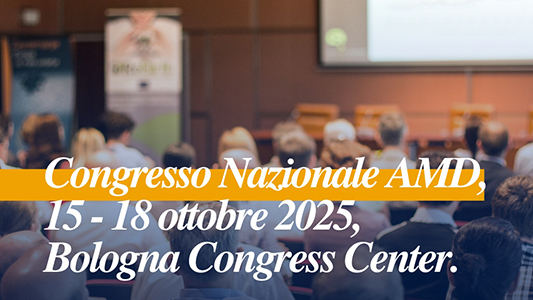
The AMD 2025 National Congress begins today at the Bologna Congress Center, an event that will bring together the leading figures in Italian diabetology until October 18.

This year's theme—"Therapeutic, technological, and healthcare innovation: building the future of diabetes together"—focuses on collaboration between institutions, specialists, and professionals in the field to develop increasingly effective, integrated, and sustainable treatment pathways.


We at Meteda are here to contribute to this dialogue by sharing experiences, listening to the needs of the scientific community, and presenting effective digital solutions for outpatient management and telemedicine.

By 0 Comments

National Congress of the Association of Diabetes Doctors AMD 2025

From October 15th to 18th, we will be in Bologna for the National Congress of the Association of Diabetes Doctors AMD 2025.

For us at Meteda, this is a fundamental event: a moment of direct discussion with professionals and experts in the diabetes sector and a chance to share our commitment to digital innovation to support their work.

This year's theme – “Therapeutic, technological, and healthcare innovation: building the future of diabetes together” – represents a precious opportunity for reflection, updating, and dialogue among all those who dedicate themselves to the care and management of diabetes every day.

We will be there to share our experience, listen, learn, and help build concrete solutions for the future of diabetes together.

By 0 Comments

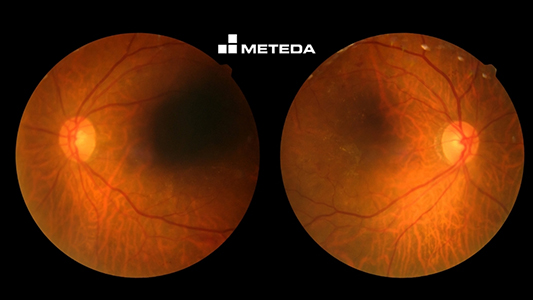
Diabetic retinopathy is one of the most serious complications of diabetes.

Meteda, together with its subsidiary Retmarker, has developed DAIRET®, an artificial intelligence-based algorithm that allows the identification of retinal defects through the automatic analysis of photographic images. acquired using retinographs.

Based on a decade of clinical data, DAIRET® has been validated in large epidemiological and cost-effectiveness studies, demonstrating high levels of sensitivity and specificity in detecting lesions typical of diabetic retinopathy.

It is a tool to support the prevention of one of the most feared complications of diabetes, which allows clinicians to integrate early assessment of retinal risk into daily practice, facilitating the identification of cases requiring further ophthalmological evaluation.

By 0 Comments

Innovation in diabetology does not just mean introducing new technologies.

At Meteda, we have been working for over twenty years with a specific goal: to transform IT devices into concrete, safe, and effective support for clinical decisions. We are convinced that only through constant collaboration with the scientific community is it possible to build truly reliable and sustainable digital medicine. This is why dialogue with scientific societies and institutions has always been an integral part of our journey. Our vision in the field of diabetes is clear: to combine innovation, precision, and proximity, for the benefit of clinicians and people with diabetes.

By 0 Comments

Telemedicine is no longer an option, but a real clinical revolution

Managing a patient with diabetes or other chronic diseases means keeping data, therapies, and communication together. But how much time does it really take?

Telemedicine was created to reduce complexity and give doctors back what matters most: time and clarity.

With Meteda devices, managing diabetic or chronic patients becomes simpler, safer, and more accessible.

With advanced telemonitoring solutions and devices that transform data into proactive clinical decisions. Not just tools, but an integrated system that improves patient quality of life and frees up resources for clinical decision-making.

Why is telemedicine so important?

  • The journey of a patient with diabetes or other chronic diseases requires constant monitoring and quick decisions.
  • Telemedicine makes this process more fluid and manageable, integrating daily clinical practice.
  • Continuity of care even remotely, fewer barriers and more communication between doctor and patient.

The integration between Meteda telemedicine devices and the Metaclinic® electronic medical record offers healthcare professionals a unique, complete and integrated platform to support the clinical management of diabetes and chronic diseases.

By 0 Comments

Our strength lies in the passion, experience and expertise of our team

Behind every Meteda digital project is a group of people who, with daily commitment, bring human value to technology.

Every year, the company Academy prepares young talents who will become the future of our team.

We believe that evolution, improvement, and continuous support are the pillars of professional growth. We promote continuous training, which supports each individual in personal development and the consolidation of knowledge, promoting a solid and progressive growth path for everyone.

By 0 Comments